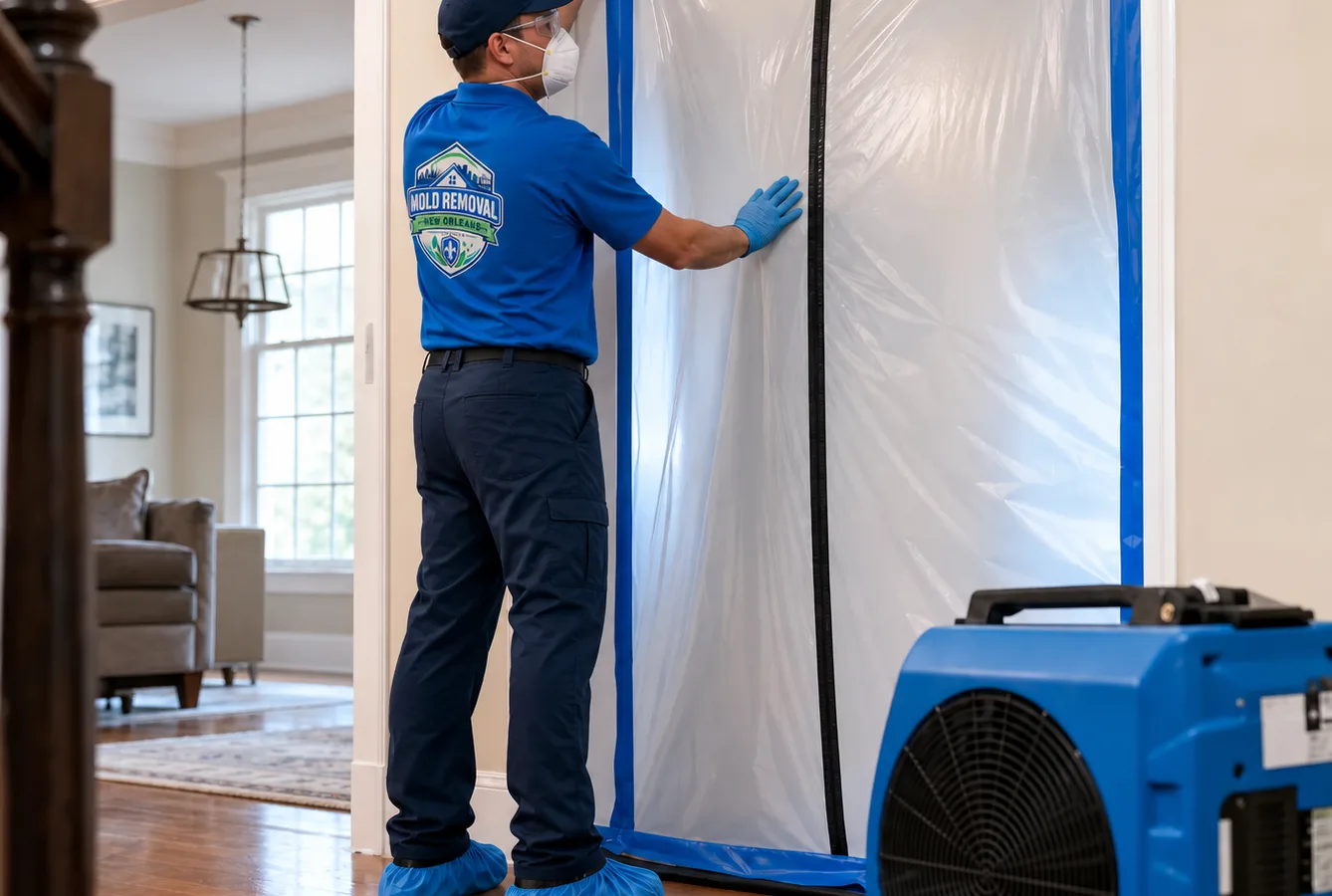
Containment that protects the rest of the building
We isolate the work area before we disturb growth. When needed, we run negative air so spores are pulled into filtration instead of drifting into hallways and adjacent rooms.
Serving New Orleans, Louisiana & surrounding areas
If you smell a musty odor, see staining, or had a recent leak, you need a plan that stops growth at the source. Mold Removal New Orleans provides careful inspection, tight containment, and thorough cleanup so your space can be safely used again.
New Orleans mold remediation is more than wiping down visible spots. A real remediation plan targets where moisture is coming from, contains disturbed spores, removes unsalvageable materials, and cleans the surrounding air and surfaces so growth does not immediately return.
In New Orleans, humidity and frequent heavy rain make it easy for hidden moisture to linger in wall cavities, under flooring, and above ceilings. That is why we start with a practical inspection and a written scope of work. If the scope changes once materials are opened, you will know why and what the options are.
A complete mold remediation project typically includes:
If you are comparing options, it helps to know the difference between a cleaning company and a remediation crew. Remediation focuses on preventing cross-contamination while work is in progress, and that is what protects the rest of the home or business.
We isolate the work area before we disturb growth. When needed, we run negative air so spores are pulled into filtration instead of drifting into hallways and adjacent rooms.
Mold follows water. We document likely moisture sources and the materials that stayed damp so drying and repair decisions are based on evidence.
Some porous materials cannot be reliably cleaned. We explain what should come out, what can stay, and how we prevent spread during demolition.
After removal, we clean remaining framing and surfaces with HEPA vacuuming and appropriate wiping so residual contamination is addressed.
You receive a straightforward scope and job notes you can share with a landlord, insurer, or facilities team when decisions or approvals are needed.
Mold remediation in New Orleans often turns on where moisture hides and how air moves through older buildings.
In areas like the French Quarter and Marigny, many properties have older materials, layered renovations, and tight chases that can conceal slow leaks for weeks. Uptown homes with raised foundations and crawlspaces can develop elevated moisture below the floor if ventilation is poor or standing water lingers after storms. In Gentilly and Lakeview, flood history and slab-on-grade construction can mean moisture moves up through flooring systems or stays trapped after water intrusions.
No matter the neighborhood, we plan containment and access around how your building is laid out. We also take New Orleans' humidity seriously: even after a leak is fixed, materials can remain wet enough to keep feeding growth. The remediation plan should match the drying reality of the Gulf Coast, not a one-size checklist.
If you want background on how our team handles mold work across the metro area, the Mold Removal in New Orleans overview explains how we approach inspections, scopes, and scheduling.
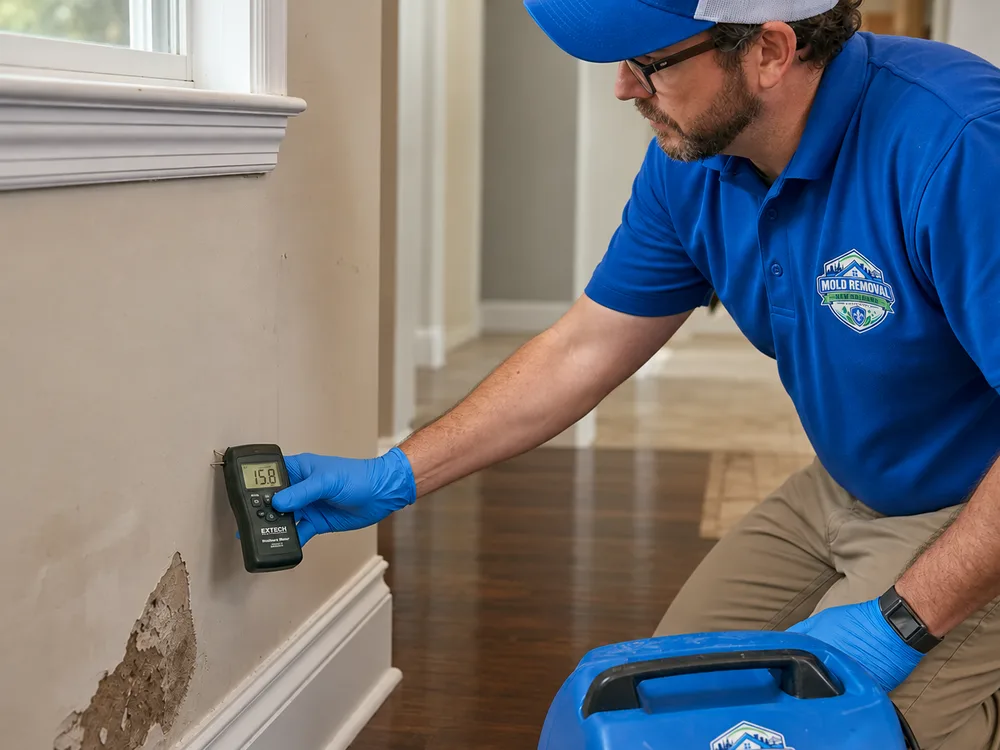
An on-property assessment establishes the source, affected extent, containment needs, and reliable work scope.
Book Your Free InspectionWe look for visible growth, musty odor patterns, and moisture pathways. When appropriate, we check suspect materials with moisture tools and outline what areas need containment, removal, and cleaning.
We seal the work zone with poly sheeting and controlled access. If disturbance could spread contamination, we use negative air with HEPA filtration to protect surrounding spaces.
We remove unsalvageable porous materials and bag out debris in a controlled way. Structural materials that can be saved are cleaned rather than automatically removed.
We HEPA vacuum and damp wipe surfaces in the work zone and handle affected contents based on material type and exposure. The goal is to reduce residual contamination, not cover it up.
If drying equipment is needed, we coordinate the plan so materials reach safe moisture levels. Before wrapping up, we verify the area is visibly clean, confirm scope items are complete, and document what was done.
Most New Orleans mold remediation projects typically range from about $1,500 to $6,500, with small, contained areas sometimes closer to $750 to $2,000 and larger multi-room or HVAC-involved jobs reaching $7,500 to $15,000+.
Your actual price depends on how many rooms are affected, how much porous material must be removed, the need for negative air containment, access to attics or crawlspaces, and whether contents need specialized cleaning. The exact cost is confirmed after an on-site inspection and a written scope of work.
“After a small roof leak turned into a mold problem behind the ceiling, they walked me through containment and what had to be removed. The work area stayed sealed off, and the musty smell was gone once everything was cleaned and dried.”
“We manage a rental and needed documentation we could share. The scope was clear, the crew showed up when scheduled, and they explained what was safe to keep versus what needed to come out.”
Most projects take 1 to 3 days of onsite work, but timelines can extend when drying is required or multiple rooms are involved. In New Orleans' humid conditions, the drying plan often determines the schedule as much as the cleanup work.
Often you can stay in the home if the affected area can be fully contained and you can avoid the work zone, but some situations call for temporary relocation. We will explain what areas must be off-limits, how airflow is controlled, and what is safest for children, seniors, or anyone with respiratory sensitivity.
Sampling is optional and is usually most useful when you need documentation for an outside party or the affected area is unclear. In many cases, remediation is driven by the extent of contamination and moisture conditions rather than the specific species, and we can explain when testing adds value.
Sometimes, yes, but only when the growth is truly surface-level and the material is dry and sound. If drywall, insulation, or carpet padding is contaminated or stayed damp, removal is usually the correct option because porous materials are difficult to clean back to an acceptable condition.
Avoid disturbing the area and do not run fans directly at visible growth, since that can move spores into other rooms. If possible, clear a path to the affected space and note any recent leaks, AC drain issues, or overflow events so we can zero in on the moisture source quickly.
Yes. We handle mold remediation for residences and commercial spaces, and we can coordinate work windows to reduce disruption. For businesses, containment setup and air control are planned around occupied areas and critical operations.
Tell us what you are seeing and where, and we will schedule an inspection, explain the containment and cleanup steps, and provide a written scope you can make decisions from.